Echo
What if your journal could talk back, in your own voice?
The spark
I journal almost every day. Voice notes on my phone, scribbles in Notion, half-finished thoughts in Apple Notes. All those words just sat there, never re-read, never resurfaced. I started wondering: what if my journal could actually reflect something back to me, in my own voice?
How I got here
Personal insight
The habit was already mine. I noticed my notes were piling up but never coming back to me. That gap became the question worth exploring.
User conversations
I ran 5 informal interviews with people who journal regularly on their phones. I asked what they wrote, where, and whether they ever returned to it.
The pattern
Everyone writes. Almost nobody re-reads. Notes were scattered across five apps that don't talk to each other, and writing felt like an obligation instead of a conversation.
The direction
Echo shouldn't be another notes app fighting for space. It should be a mirror: something that makes writing feel worth it because the words come back.
The concept
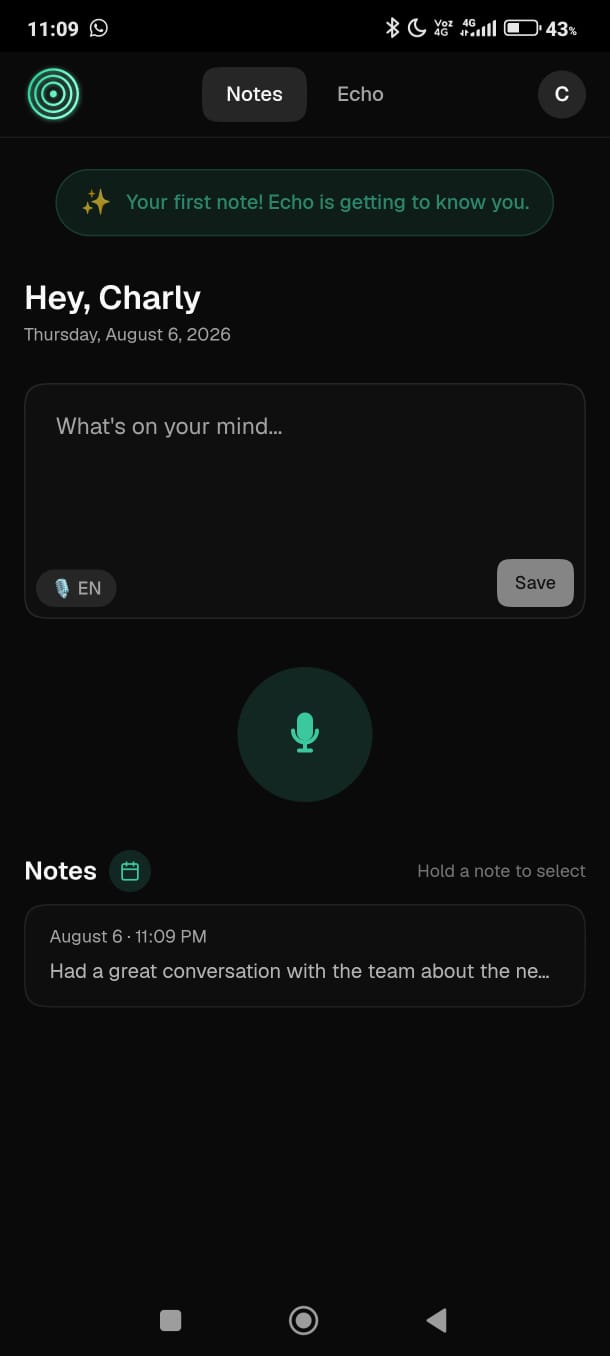
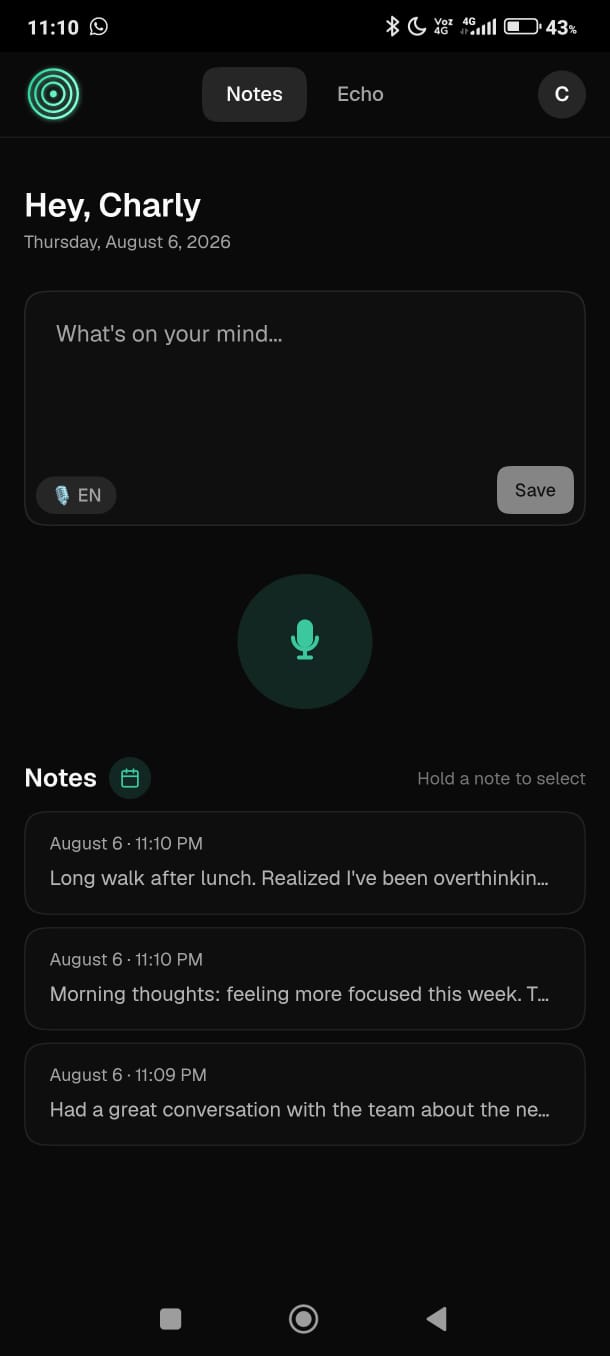
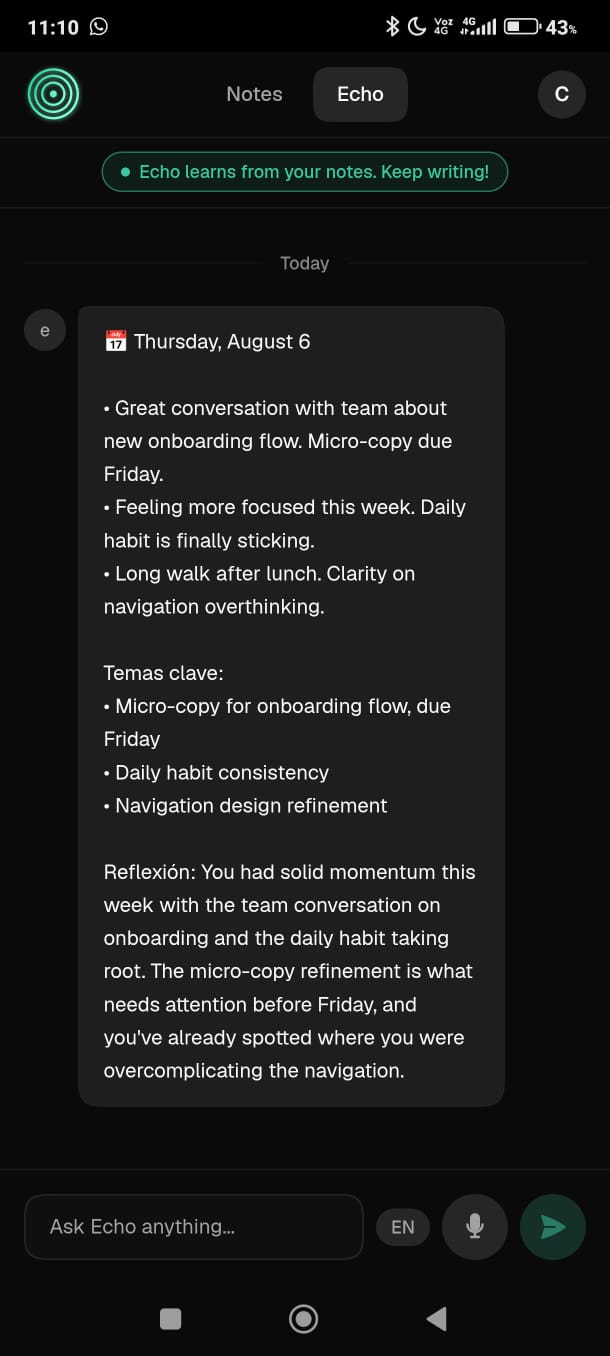
You write freely every day, in text or voice. When you're ready, you open a conversation with Echo. It reads all your past entries and responds in your style: your sentence length, your tone, your recurring themes. The more you write, the more it sounds like you.
App screens
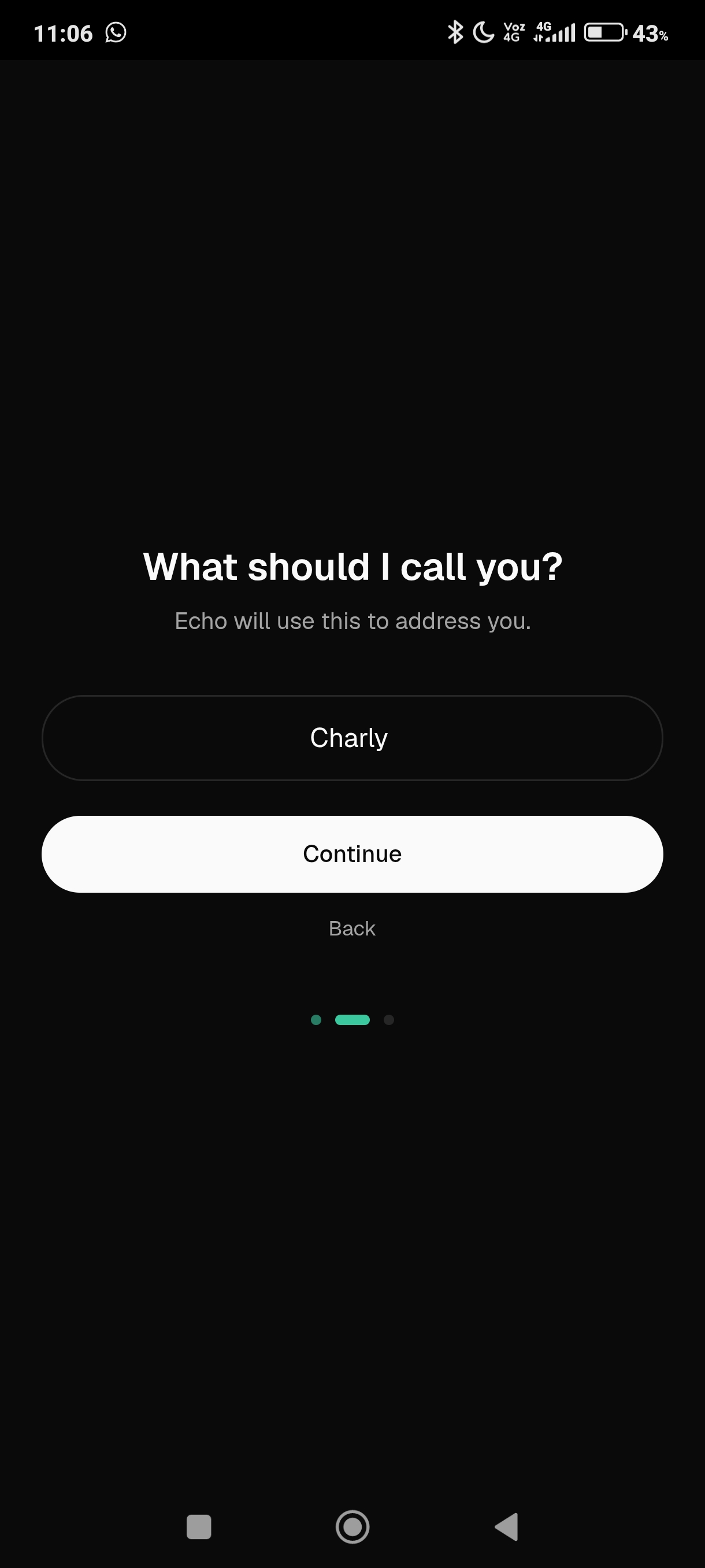
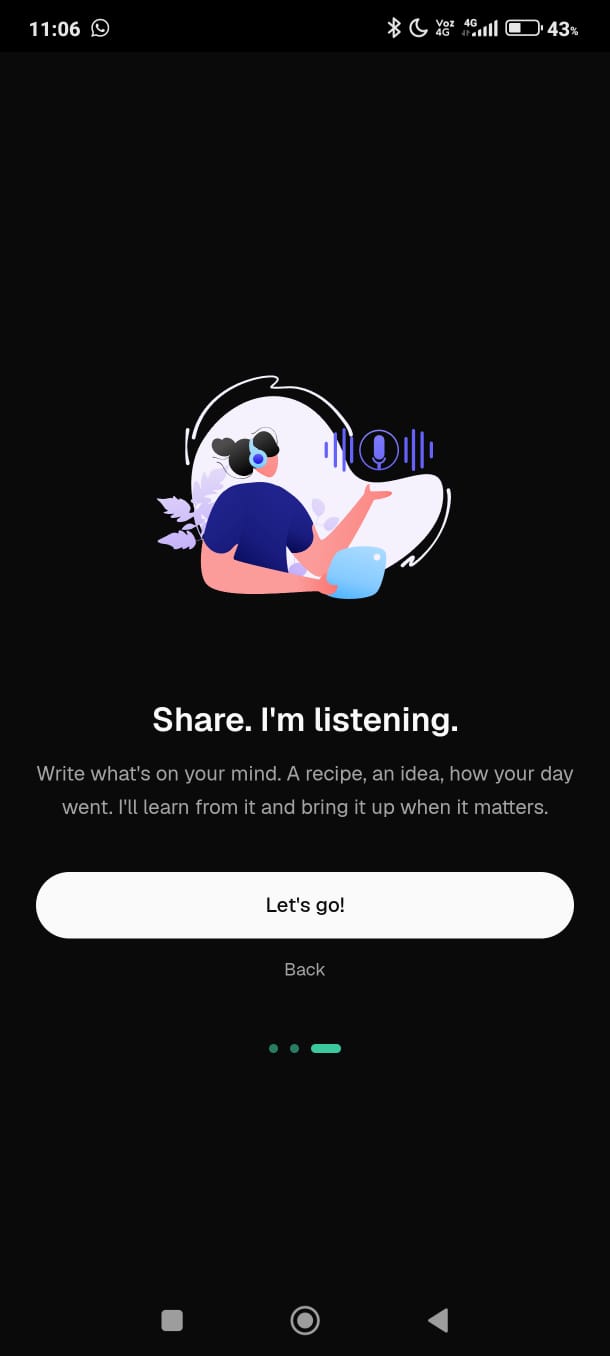
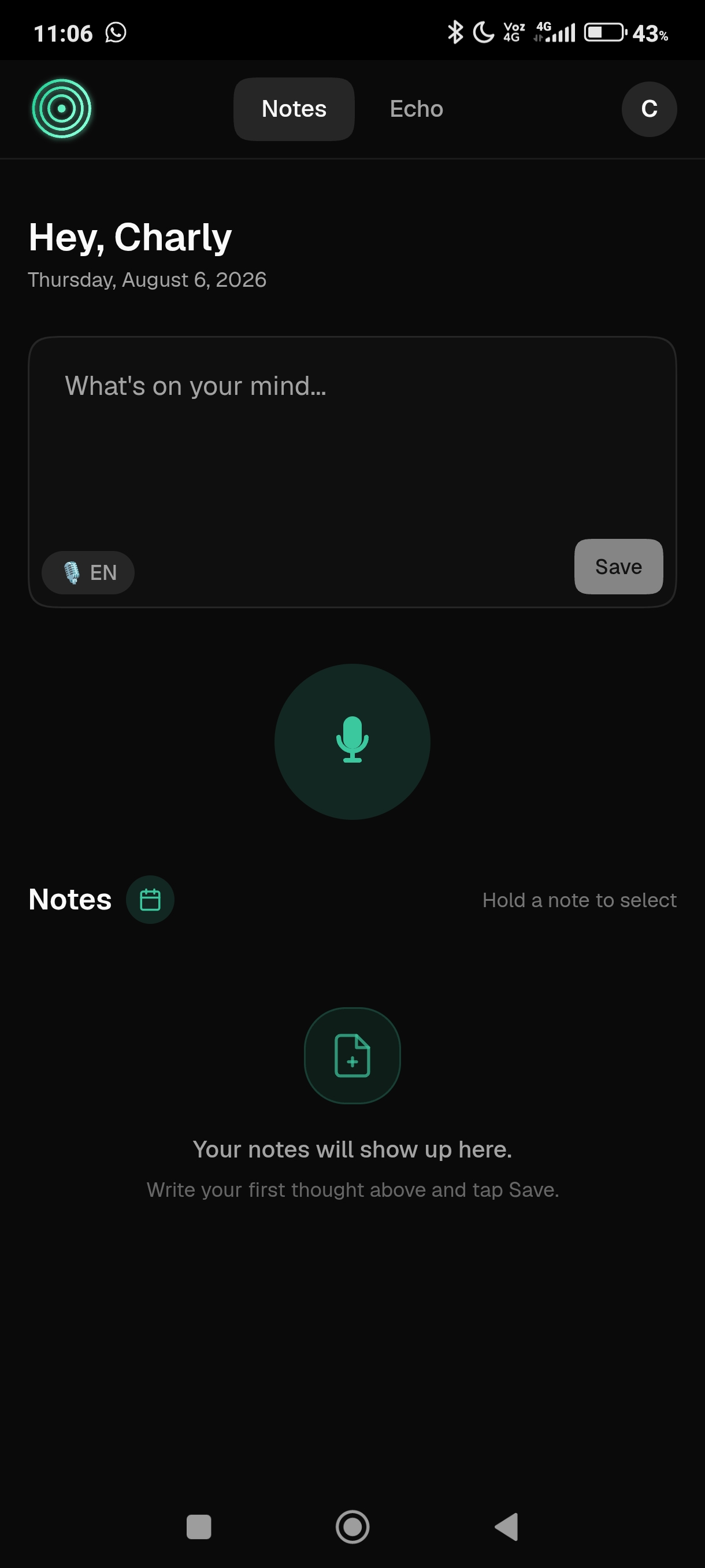
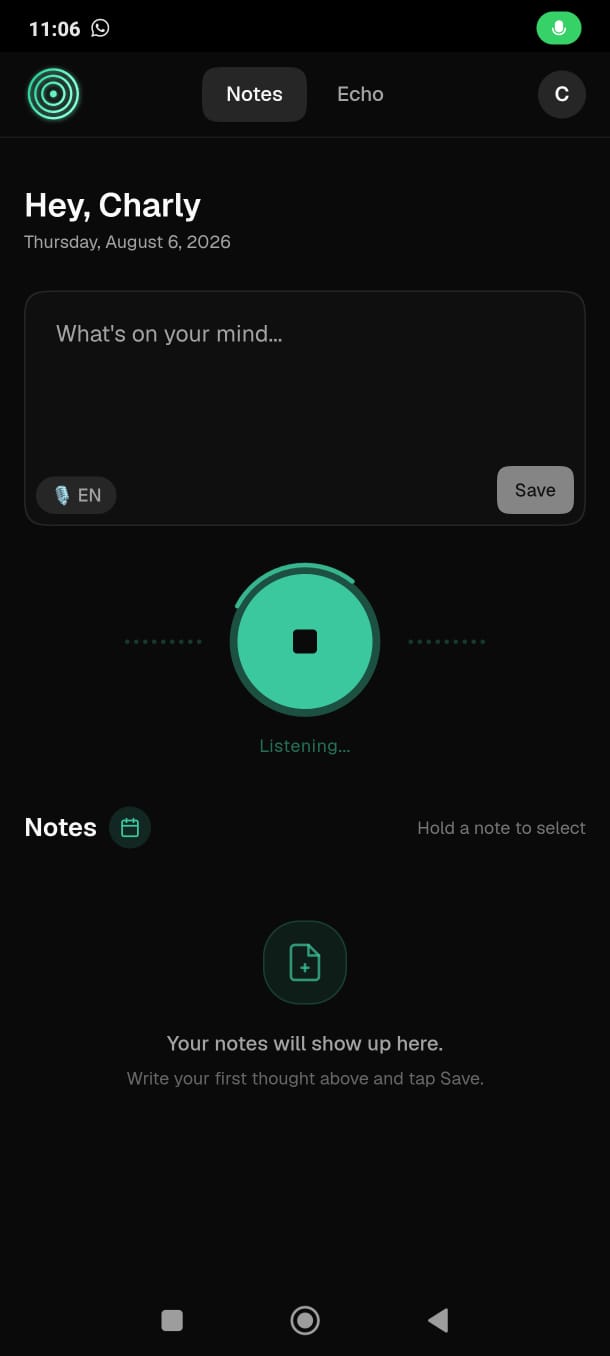
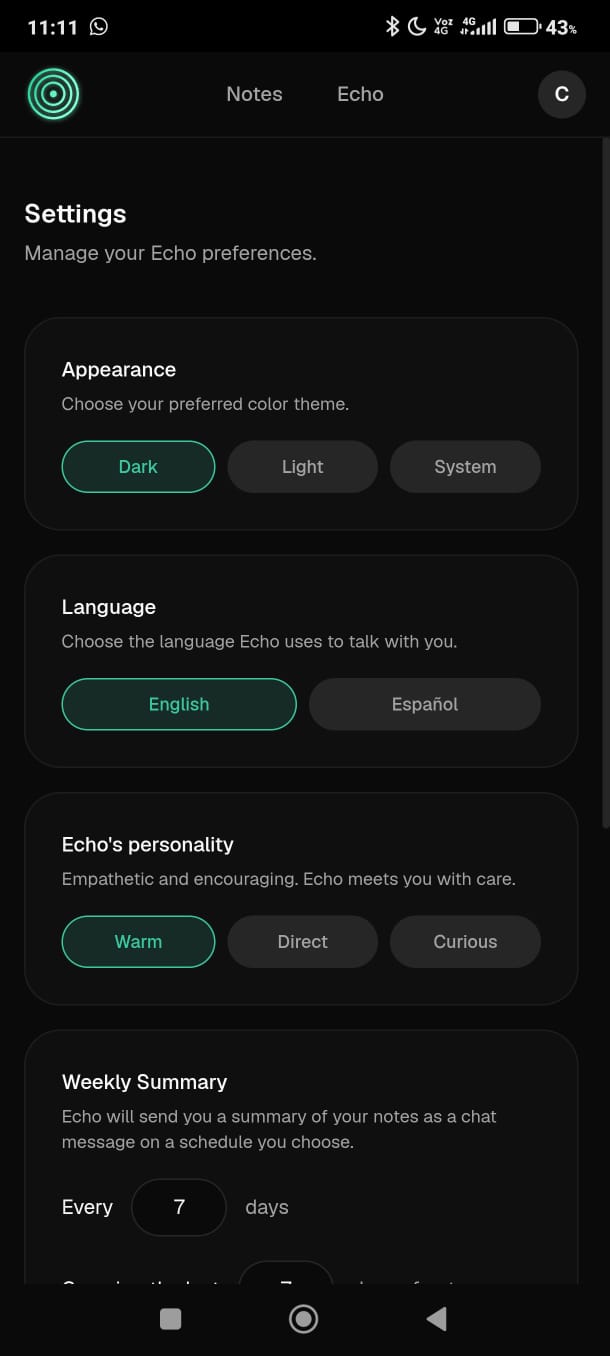
Design decisions
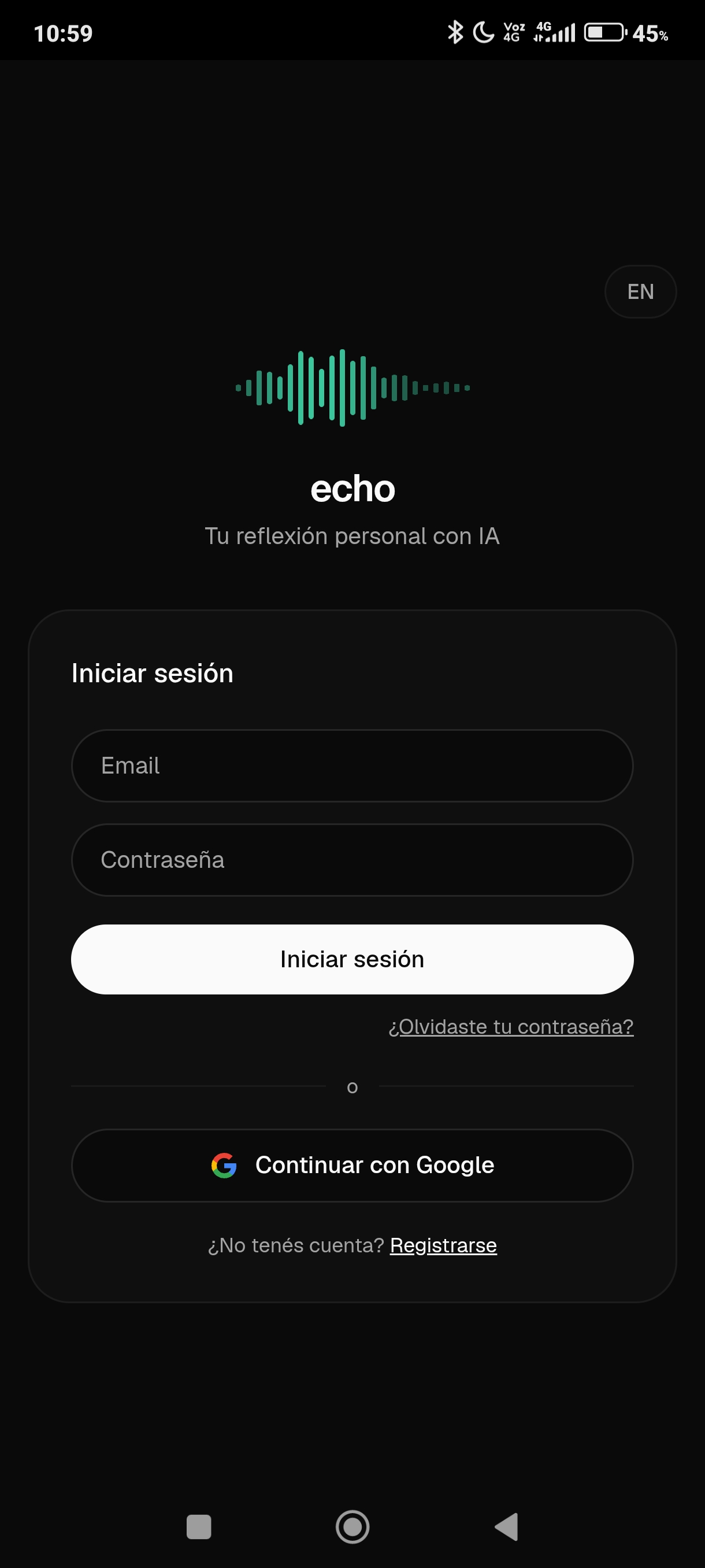
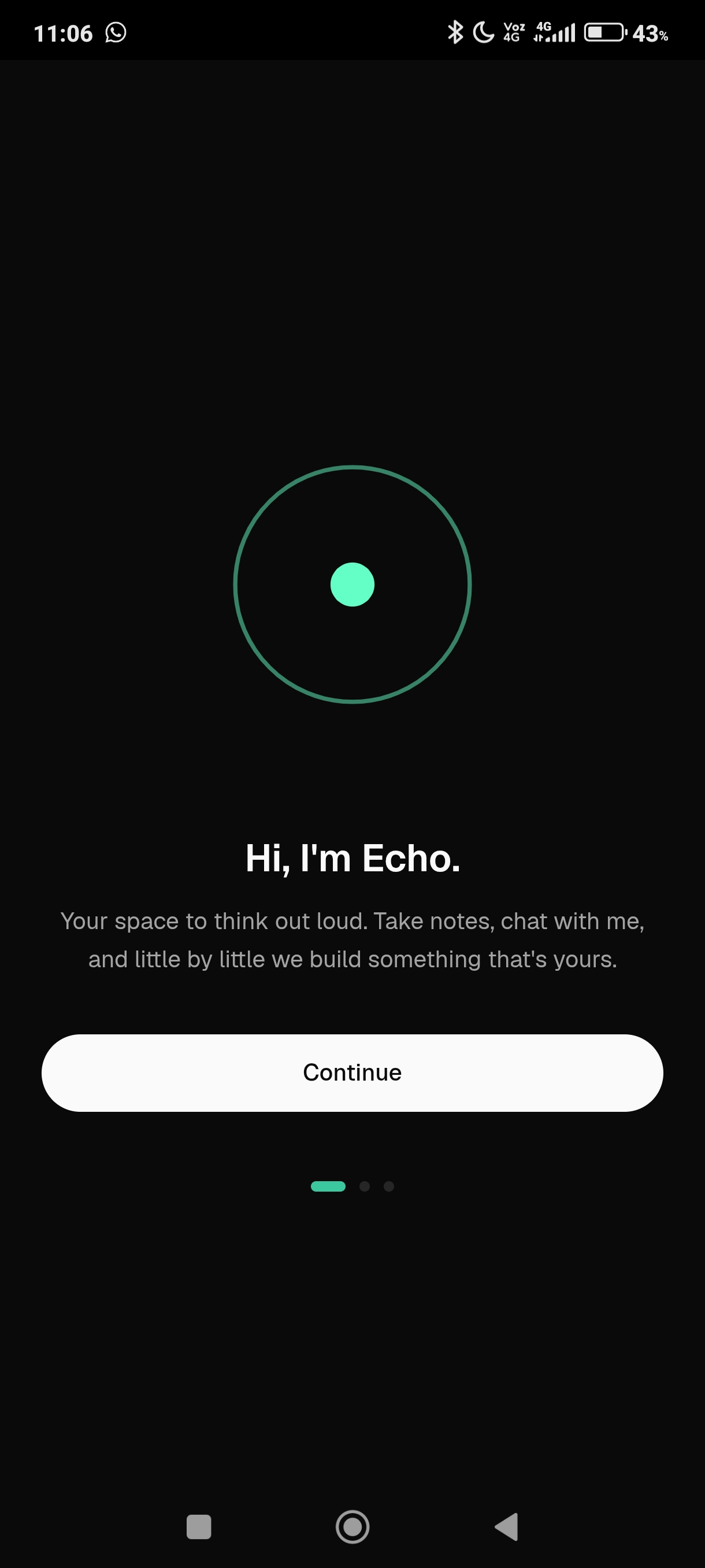
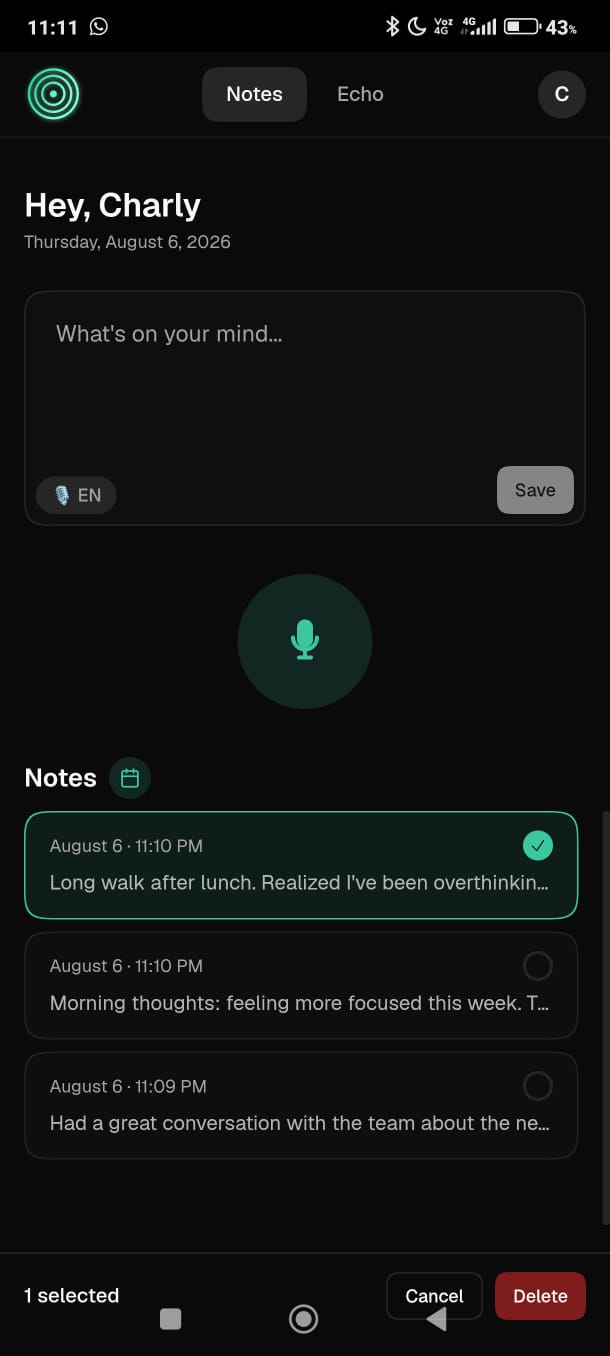
One textarea, not multiple fields. Dark mode only, because journaling is personal, intimate. Squircle corners everywhere for warmth. Mint as the sole accent color: calming but alive. The UI stays out of the way so the words are the focus.
The prompt as design
The hardest interface wasn't visual. It was the system prompt. Getting Claude to genuinely mirror someone's voice instead of defaulting to its own required dozens of iterations. That prompt is where the product actually lives.
From designer to builder
I've spent years designing products that other engineers build. With Echo I wanted to own the whole thing: figure out where the design idea breaks against real infrastructure, and where the code shapes the design back. I paired with Claude Code as a co-pilot, but every architectural decision, every API call, every deployment was mine to make. That changed how I designed. Loading times aren't abstract anymore. Rate limits stop being someone else's problem. The auth flow gets scoped down because I'm the one wiring it up.
The stack
What I learned
Owning both sides, design and engineering, changes what you ship. The scope stayed small because I felt the cost of every decision. The interactions stayed simple because I had to build them. The AI stayed honest because I could see when the prompt was doing too much work. Next time I design a product, I'll design it knowing what the wiring underneath actually costs.